







Different Industries.
Different Risks.
One Thing in Common:
The Need to Know.
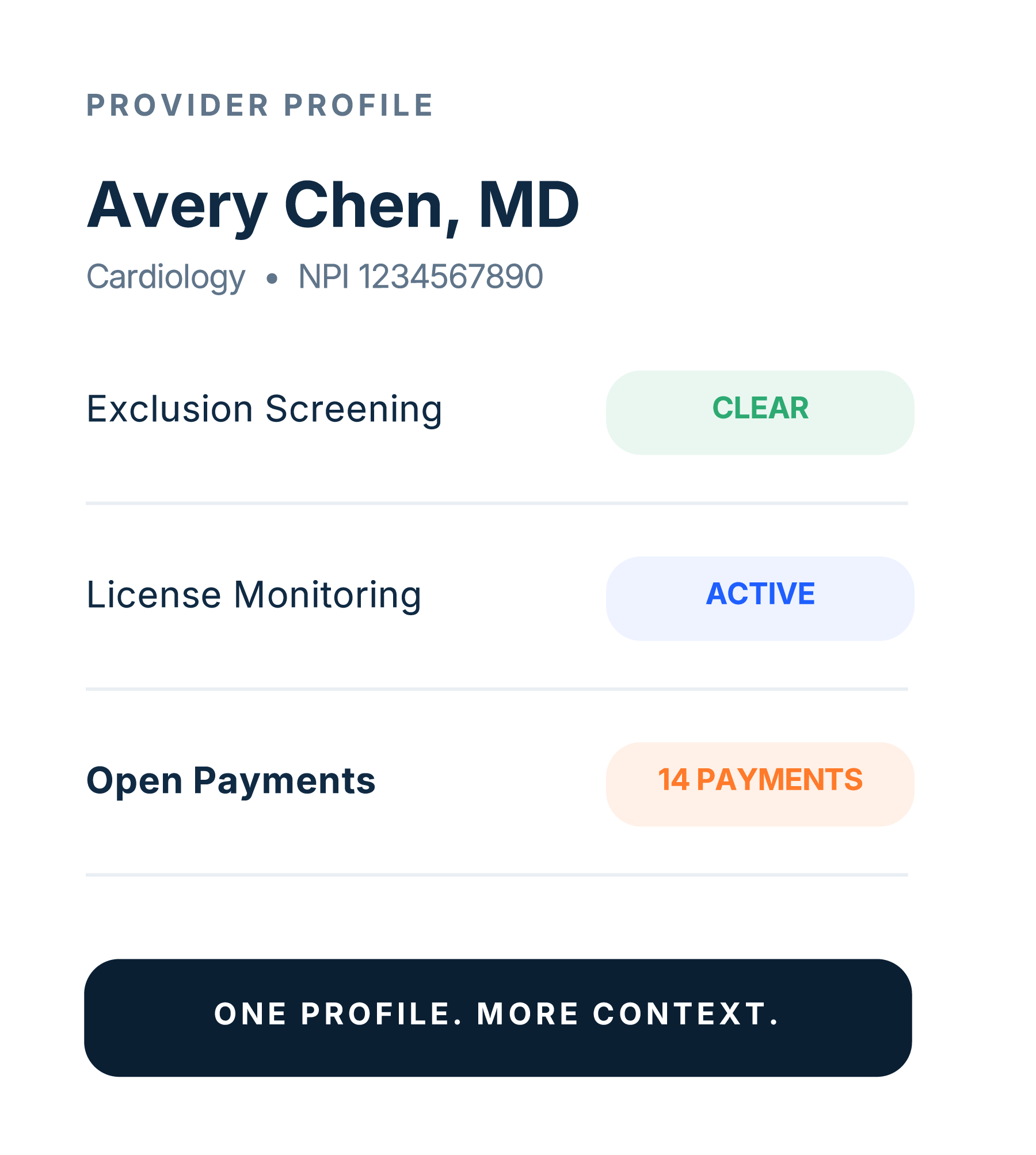
Inside the screening workflow you already run
Healthcare Organizations
CMS Open Payments Monitoring
Hospitals & Health Systems
Physician & Clinical Leadership Conflicts
Identify undisclosed manufacturer financial relationships.
Hospitals and health systems rely on physicians, medical directors, and clinical leaders to make important decisions affecting patient care. Monitoring can identify consulting fees, speaking payments, research compensation, and other financial relationships with pharmaceutical and medical device manufacturers that may create conflicts of interest or require disclosure.
Medical Device & Purchasing Integrity
Review manufacturer ties influencing product selection.
Hospitals purchase expensive medical devices, surgical implants, diagnostic equipment, and treatment supplies. Monitoring can identify whether physicians involved in recommending or selecting these products receive compensation from their manufacturers, helping organizations evaluate potential conflicts affecting purchasing decisions, product standardization, and costs.
Research & Clinical Trial Integrity
Verify industry funding and investigator disclosures.
Hospitals and health systems frequently participate in manufacturer-sponsored clinical trials and research initiatives. Monitoring helps identify financial relationships involving researchers and clinical investigators, allowing organizations to verify disclosures and evaluate potential conflicts affecting research independence and patient safety.
Why this matters:
Centralized monitoring provides visibility across departments, facilities, and affiliated physicians while supporting compliance, procurement integrity, and research oversight.
Health Plans
Pharmacy & Therapeutics Committee Conflicts
Identify financial conflicts influencing formulary decisions.
Health plans rely on Pharmacy & Therapeutics (P&T) committees to evaluate medications, establish formularies, and develop clinical policies. Monitoring can identify financial relationships between committee members and pharmaceutical manufacturers whose medications are under consideration, helping plans verify disclosures and manage potential conflicts of interest.
Prescribing Patterns & Healthcare Costs
Detect potential payment-related prescribing concerns.
Physicians receiving compensation from pharmaceutical manufacturers may also prescribe those manufacturers’ medications. By combining Open Payments information with pharmacy claims, health plans can identify financial relationships associated with unusual prescribing patterns, particularly involving high-cost branded medications, and determine whether further clinical review is warranted.
Fraud, Waste & Abuse Prevention
Flag potentially improper financial relationships.
Health plans maintain programs to identify fraud, waste, abuse, and inappropriate healthcare utilization. Monitoring can highlight unusual manufacturer payments, consulting arrangements, and ownership interests involving participating providers, giving compliance teams and Special Investigations Units additional information for risk assessment and investigation.
Why this matters:
Open Payments can strengthen formulary governance and investigative oversight, particularly when combined with claims, utilization, and provider data.
Home Health Agencies
Clinical Leadership Conflicts
Identify undisclosed manufacturer financial relationships.
Home health agencies rely on medical directors, physicians, and advanced practice providers to oversee patient care. Monitoring helps identify consulting fees, speaking payments, and other financial relationships with pharmaceutical and medical device manufacturers that could create potential conflicts of interest or require disclosure.
Medication & Treatment Oversight
Detect potential payment-related prescribing concerns.
Home health patients often require complex medication management, including antibiotics, infusion therapies, and chronic disease treatments. Monitoring can identify financial relationships between prescribing providers and pharmaceutical manufacturers, helping organizations evaluate potential influences on medication recommendations and treatment decisions.
Medical Equipment & Supply Selection
Review manufacturer ties in product selection.
Home health agencies utilize wound care products, infusion equipment, and other medical supplies. Monitoring can identify whether physicians involved in recommending these products have financial relationships with their manufacturers, helping organizations evaluate potential conflicts in clinical recommendations and product selection.
Why this matters:
Monitoring provides greater transparency into outside financial relationships involving clinicians whose recommendations affect home-based treatment and care.
Hospice Providers
Medical Director Conflicts
Identify undisclosed manufacturer financial relationships.
Hospice medical directors oversee patient care, approve treatment plans, and guide clinical decisions. Monitoring can identify consulting fees, speaking payments, and other financial relationships with pharmaceutical and medical device manufacturers that may create conflicts of interest or require disclosure.
Pain & Symptom Management
Flag potential payment-related prescribing concerns.
Hospice patients frequently require medications for pain, nausea, agitation, and other symptoms. Monitoring can identify whether prescribing physicians maintain financial relationships with manufacturers of medications they recommend, particularly when high-cost or branded alternatives are involved.
Medical Equipment & Supplies
Review manufacturer ties in product selection.
Hospice providers arrange medical equipment and supplies, including oxygen equipment, infusion devices, and other products used in end-of-life care. Monitoring can identify reportable financial relationships between manufacturers and physicians involved in recommending these products, helping organizations evaluate potential purchasing and treatment-related conflicts.
Why this matters:
Monitoring helps hospice organizations maintain transparency around clinical leadership and treatment decisions while supporting responsible patient care.
Medical Practices
Physician Conflicts of Interest
Identify undisclosed manufacturer financial relationships.
Medical practices need visibility into financial relationships their physicians and advanced practice providers maintain with pharmaceutical and medical device manufacturers. Monitoring can identify consulting fees, speaking payments, research compensation, and ownership interests that may create conflicts of interest or require disclosure under practice policies.
Prescribing Oversight
Flag potential payment-related prescribing concerns.
Physicians may receive compensation from manufacturers whose medications they prescribe. Monitoring helps practices identify these relationships and, when combined with prescribing data, evaluate whether financial interests could be influencing medication choices, particularly expensive branded drugs.
Device & Supply Selection
Review financial ties influencing product choices.
Medical practices purchase and recommend medical devices, implants, diagnostic equipment, and treatment supplies. Monitoring can identify whether physicians involved in selecting these products receive compensation from their manufacturers, helping practices evaluate potential purchasing conflicts.
Why this matters:
Monitoring helps medical practices manage conflicts of interest, strengthen transparency, and identify inaccuracies in publicly reported physician payment information.
Behavioral Health Organizations
Clinical Leadership Conflicts
Identify undisclosed manufacturer financial relationships.
Behavioral health organizations rely on medical directors, psychiatrists, and psychiatric nurse practitioners to oversee clinical care. Monitoring can identify consulting fees, speaking payments, and other compensation from pharmaceutical manufacturers that may create conflicts of interest or require disclosure.
Psychotropic Medication Oversight
Flag potential payment-related prescribing concerns.
Behavioral health providers prescribe antidepressants, antipsychotics, ADHD medications, and medications for substance use disorders. Monitoring can identify financial relationships between prescribers and drug manufacturers, helping organizations evaluate potential influences on prescribing decisions, particularly when expensive branded alternatives are involved.
Treatment Protocol Integrity
Review industry ties influencing clinical guidelines.
Behavioral health organizations establish treatment protocols and medication guidelines for conditions such as depression, schizophrenia, and substance use disorders. Monitoring can identify whether clinicians involved in developing these protocols have financial relationships with manufacturers whose medications are recommended, helping organizations evaluate potential conflicts affecting clinical guidance.
Why this matters:
Monitoring supports medication management oversight, conflict-of-interest compliance, and confidence that treatment recommendations are based on clinical considerations.
Laboratories
Medical Director Conflicts
Identify undisclosed manufacturer financial relationships.
Laboratories rely on medical directors and pathologists to oversee testing quality, clinical decisions, and laboratory operations. Monitoring can identify consulting fees, speaking payments, and other compensation from diagnostic and medical device manufacturers that may create conflicts of interest.
Diagnostic Purchasing Integrity
Review manufacturer ties influencing equipment selection.
Laboratories purchase expensive diagnostic equipment, testing platforms, reagents, and supplies. Monitoring can identify whether physicians involved in selecting these products receive compensation from their manufacturers, helping organizations evaluate potential conflicts in purchasing decisions.
Research Independence
Verify industry funding and investigator disclosures.
Laboratories may participate in clinical research, diagnostic test development, and validation studies sponsored by manufacturers. Monitoring helps identify reported industry payments associated with participating physicians and investigators, allowing laboratories to verify financial disclosures and evaluate potential conflicts affecting research independence.
Why this matters:
Monitoring supports objective laboratory decision-making, purchasing transparency, and research integrity, particularly in physician-led and research-focused laboratories.
Pharmacies
Prescriber Relationships
Identify manufacturer payments to prescribing physicians.
Pharmacies fill prescriptions from physicians and other healthcare providers who may receive consulting fees, speaking payments, or other compensation from pharmaceutical manufacturers. Monitoring helps identify these financial relationships, particularly among high-volume prescribers, and flag potential conflicts warranting further review.
Specialty Drug Oversight
Compare financial ties with dispensing patterns.
Specialty pharmacies dispense expensive medications for conditions such as cancer, autoimmune diseases, and multiple sclerosis. By combining Open Payments data with dispensing records, pharmacies can identify whether physicians receiving substantial manufacturer payments prescribe unusually high volumes of those manufacturers’ medications, supporting further utilization and compliance review.
Clinical Advisory Conflicts
Verify committee members’ financial disclosures.
Larger pharmacy organizations and specialty pharmacies may have clinical advisory committees that establish medication protocols, review specialty drug programs, or advise on treatment-related policies. Monitoring helps verify whether participating physicians have disclosed financial relationships with manufacturers whose medications are under consideration.
Why this matters:
Open Payments monitoring can provide specialty pharmacies with additional insight into prescriber relationships, medication utilization, and potential conflicts involving clinical advisors.
Ambulatory Surgery Centers (ASCs)
Surgeon Conflicts of Interest
Identify undisclosed manufacturer financial relationships.
Ambulatory surgery centers rely on surgeons to make clinical decisions involving procedures, medical devices, and treatment options. Monitoring can identify consulting fees, speaking payments, royalties, and other financial relationships between surgeons and medical device manufacturers that may create conflicts of interest or require disclosure.
Surgical Implant & Device Selection
Identify financial ties influencing device selection.
ASCs frequently use orthopedic implants, spinal devices, ophthalmic lenses, and other surgical products. Monitoring can identify whether surgeons recommending or selecting these products receive compensation from their manufacturers, helping organizations evaluate potential conflicts affecting clinical decisions and product selection.
Purchasing & Financial Integrity
Review manufacturer relationships affecting purchasing decisions.
ASCs must manage surgical supply costs while maintaining quality patient care. Monitoring can identify financial relationships between physicians and manufacturers whose products are used at the facility, helping leadership evaluate potential conflicts involving purchasing contracts, product standardization, and cost management.
Why this matters:
Surgical implants and devices can represent significant procedure costs. Monitoring provides greater transparency into surgeon-manufacturer relationships and supports purchasing integrity and conflict-of-interest oversight.
Skilled Nursing Facilities (SNFs)
Medical Director Conflicts
Identify undisclosed manufacturer financial relationships.
Skilled nursing facilities rely on medical directors, attending physicians, and advanced practice providers to oversee resident care and guide clinical decisions. Monitoring can identify consulting fees, speaking payments, and other financial relationships with pharmaceutical and medical device manufacturers that may create conflicts of interest or require disclosure.
Medication Management & Prescribing Oversight
Flag potential payment-related prescribing concerns.
Skilled nursing residents frequently require multiple medications to manage chronic conditions, infections, pain, and behavioral symptoms. Monitoring can identify financial relationships between prescribing providers and pharmaceutical manufacturers, helping facilities evaluate potential influences on medication choices, particularly involving antipsychotics, antibiotics, and expensive branded medications.
Wound Care & Medical Supplies
Review manufacturer ties influencing treatment products.
Skilled nursing facilities regularly utilize wound care products, specialized dressings, medical devices, and other treatment supplies. Monitoring can identify whether physicians involved in recommending these products receive compensation from their manufacturers, helping facilities evaluate potential conflicts affecting clinical recommendations and product selection.
Why this matters:
Monitoring supports physician oversight, medication management, purchasing transparency, and compliance processes while helping skilled nursing organizations identify potential conflicts affecting resident care.
Hassle-free & guaranteed OIG Compliance
How? With Verify Enterprise, Streamline Verify’s full-service exclusion screening package.
Verify Enterprise completely removes the burden of exclusion screening from your shoulders with our OIG Exclusion Software, relieving your staff of a burdensome and complex chore while affording you a 100% compliance guarantee.

Features

Comprehensive, full-facility OIG exclusion screening

Automatic transfers

Speedy & conclusive resolution of all flagged matches

Immediate notification of exact matches
Including license number & NPI lookup from primary sources

Unlimited queries